

What differentiates us from chimpanzees, besides stature and facial hair? Yes, they use tools, yes they have close-knit groups, they can communicate, teach each other, go to war… It’s fire!
The science community theorizes that one of the key triggers in our evolution (among many, to be fair), in this particularly clever path that Homo sapiens took, is the implementation of fire into our daily lives, especially in regards to nutrition. The bountiful benefits of cooked, parasite-free calories and protein our ancient ancestors could get out of a delicious medium-rare mammoth steak cannot be overstated. Fire, in breaking down animal tissues like collagen, outsources part of the digestive process outside of our body in a vitally supportive way that allows for more efficient metabolization and caloric intake. Again, not to mention the pivotal decrease in risk of death by disease, bacteria, or parasites through cooking meats, grains, and fruits.
Starting with Homo erectus, our ancestors first harnessed the power of fire some 1.7 to 2 million years ago. At first, that would have been limited to controlled burns, a useful tool against predators and prey. Approximately 800,000 years ago, we start seeing evidence of cooking fires. As the evidence consists of piles of burned bone, teeth, and ash - an understandably limited source - archaeologists generally consider the use of fire in cooking to be “at least” that old but could have been introduced anywhere between then and 1.8 million years ago.
That higher calorie intake allowed us, over generations and generations, to grow larger and larger brains. There’s this unfortunate urban myth out there that humans only use 10% of our brain, with the rest perhaps active in dreams, or containing the soul, or metabolizing gluten. That’s not true. Point is, the brain takes an incredible amount of calories to maintain - approximately 20% of your diet and oxygen goes to feeding that beast. So only through this sustained, (relatively) safe caloric intake were we able to evolve our great, big, beautiful brains and thus here we are today, such terrifically clever little animals.
Generations of brainpower bring us now to stand at the cusp of the next grand stage of evolution: the advent of artificial intelligence. Specifically, I must emphasize, authentic artificial general intelligence. We are not there yet, no matter what the headlines or marketing campaigns say. We’ll get into differentiating the key terms at play here later.
Today, there are almost-countless and constant new commercial efforts to develop AI tools, assets, assistants to boost company productivity driven by expected boons of cost-cutting and profitability. Some are logical implementations, but an awful many are bandwagon hype. Apparently everything - your bank account, toaster, golf club - is now “powered by AI.” The world is in the midst of a global Artificial Intelligence bubble.
Now, the last comparable bubble would be the late 90s “dot-com bubble” arising from excitement and endless hype over the new frontier that was the world wide web. 52% of such companies were dead by 2004, and most of the investor value accrued during its rise disappeared, with $5 trillion in market capitalization (total stock value) up in smoke by the end of 2002 - I must note of course, that September 11th and its aftermath also played a substantial role. Nevertheless, despite the losses of early investors and startup companies, the internet arrived and has fundamentally changed civilization. AGI, when it actually comes, will make that look like a drop in a pond.
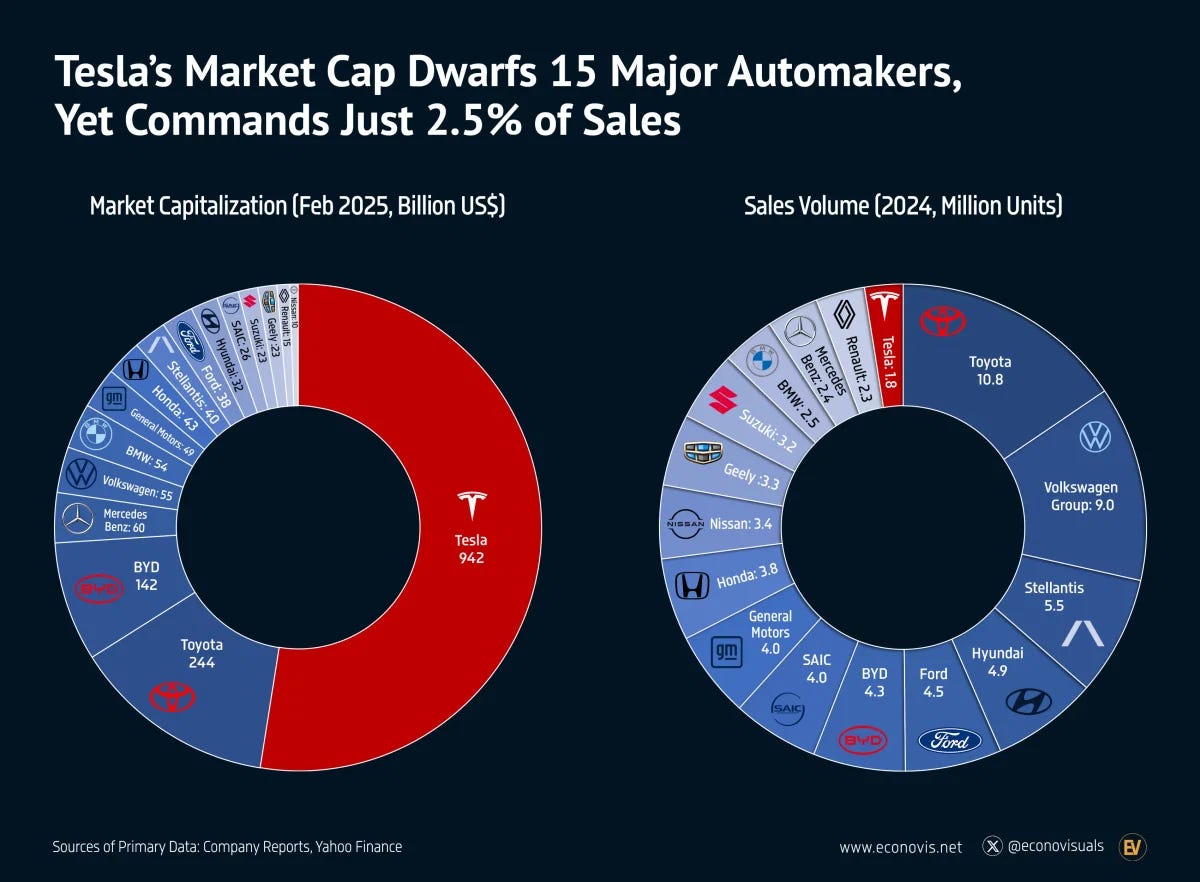
For an easy example of a singular bubble, check out Tesla’s market capitalization (total value of all stock) and sales versus its peers. That’s hype and hope drowning out realistic expectations because no one wants to miss out on a shooting star!
Despite the proclamations of marketing departments everywhere, we do not yet have Artificial Intelligence in the way we understand it through the lens of Hollywood and sci-fi authors like Isaac Asimov. Instead, what we do have now are essentially incredibly capable chatbots or, to use the proper terminology, LLMs (language learning models). The true gap therein is minimized because “we made a chatbot that read everything on Facebook” does not sell as well as “a digital superbrain.” Nevertheless, the intoxicating hurricane of money and profit swirling around the industry is blinding us, discouraging healthy analyses of potentials and pitfalls. OpenAI’s risk team famously was disbanded in 2024, and IBM’s CEO just recently declared the emperor is not wearing clothes.
Meanwhile, users are getting into trouble, sometimes fatally, from trusting these amazing tools the way we would a physician or a lawyer within their areas of expertise.

These models - from Siri or Google Assistant on your phone to the $200/month ChatGPT Pro - are phenomenal pattern-recognition tools. And that’s essentially it. Their central purpose is to give an answer and will give one, whether or not they have actual data and reasoning to support it. LLMs have been trained on curated sections of the internet - for example, Elon Musk’s AI assistant Grok has been trained in part by Twitter (X) posts. Yet people trust Grok much more than user @xXSuperfly420Xx. That’s where problems with fake court cases or medical evidence come into play for professionals, and daily advice can be perniciously or amusingly wrong.
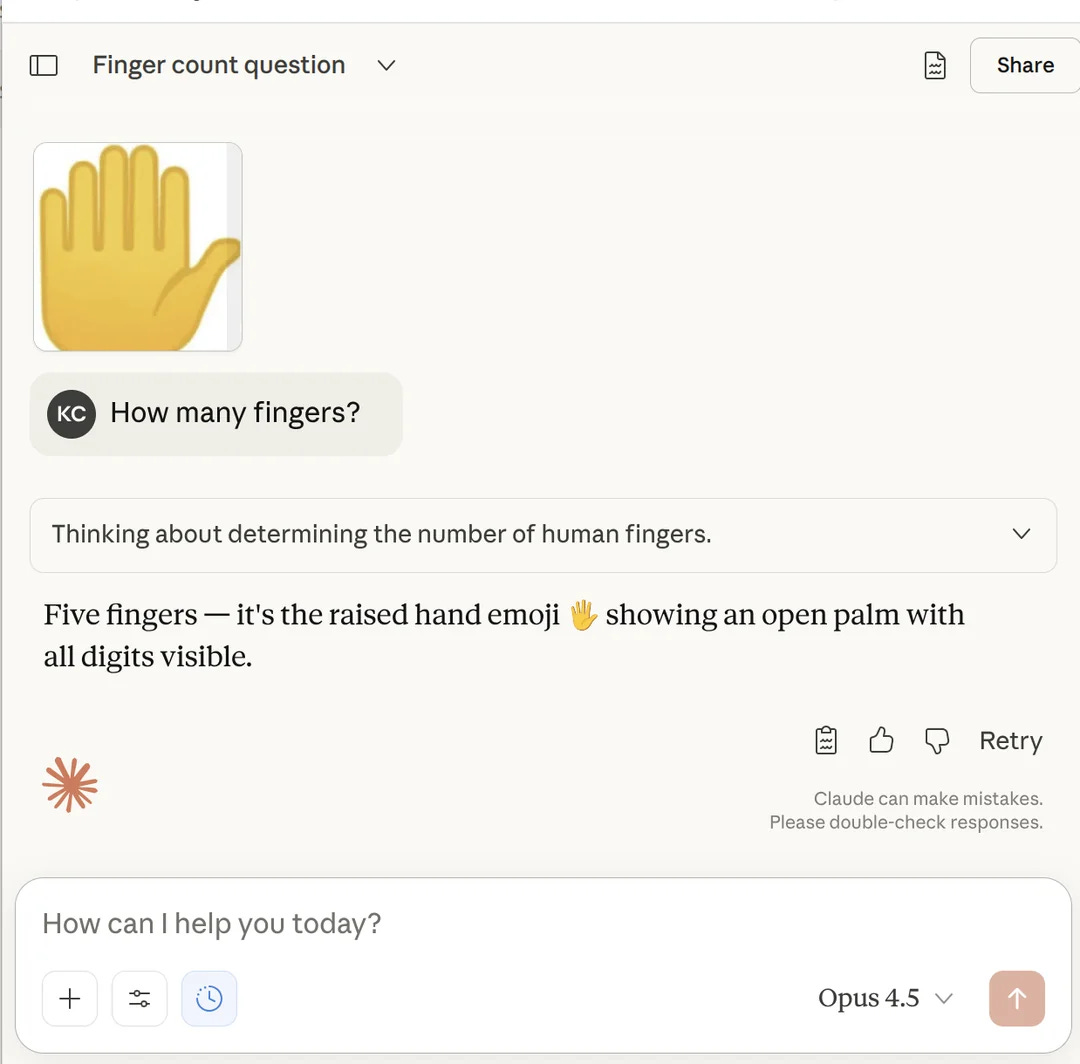
Looping back to my previous article (apologies for the long delay, it’s been a busy month!), AI is exacerbating the worst tendencies of social media. The closed loop of online communities consistently prevents reality from knocking at the door. AI can be used to support bad arguments - see mom, I can cook with gasoline! - in a digital “appeal to authority” fallacy of logic. Because we do not understand the nature of the AI tools currently in play, people look to answers from ChatGPT, Siri, Opus, Grok as equivalent to a professional’s, which is having dangerous real world effects.
Some fun examples of these deficiencies.
“Patients who were lying down were much more likely to be seriously ill, so the algorithm learned to identify COVID risk based on the position of the person in the scan.”
“Zillow said the algorithm led it to unintentionally purchase homes at higher prices rather than its current estimates of future selling prices, resulting in a $304 million inventory write-down (loss) in Q3 2021.”
AirCanada was found liable for the lies its customer service chatbot told a customer about airline policies.
NYC’s “MyCity falsely claimed that business owners could take a cut of their workers’ tips, fire workers who complain of sexual harassment, and serve food that had been nibbled by rodents.”
One of the key problems behind these incidents is in the core programming of these LLM AI assistants. Again, the central purpose of these is to give an answer, whether or not they can. For comparison, let’s go back to one of the classic bits of the Calvin & Hobbes comic strip with the silly explanations Calvin’s Dad gives for various real-world phenomena.
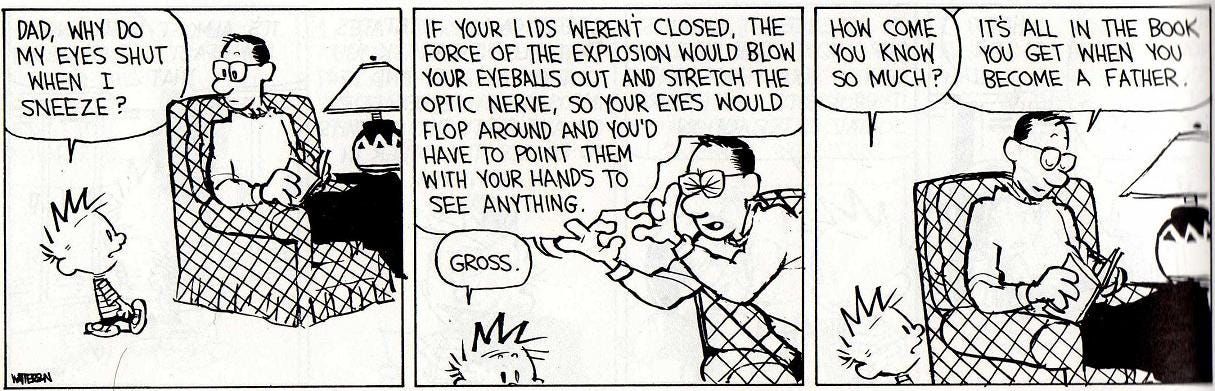
Parents get asked all sorts of questions and “I don’t know” isn’t always enough. Good luck with that endless, robotic loop of “But why?” from a 5-year-old. An LLM, like OpenAI’s ChatGPT or Google’s Gemini, faces the same challenge. It is designed to give an answer. But, if it paradoxically can’t find one or has been trained (repeatedly shown) on incorrect information, it will present fabrications as truth. It will create evidence.
Two major hurdles AI developers face are misalignment and mirages. A misalignment occurs when a model does things that don’t align with a human user’s intentions or values - think HAL in 2001: A Space Odyssey. A mirage is when AI hallucinates medical information or a legal precedent or lists out “noted benefits” of suicide.
One of classic tests of AI capabilities on the visual front is the prompt “Will Smith eating spaghetti.” Look how quickly AI visual capabilities have come in just a couple years. Want to guess where they will be in another two? Individualized movie-games responding to user input, a 360 degree choose your own adventure.
I’m no Luddite and the potential of even today’s limited AI tools is an exceptional opportunity across almost every field. We are on the cusp of socio-technological upheaval of a likes no one alive has ever seen. Artificial General Intelligence, with original thought, imagination, a new kind of sapience, is not something to inherently fear. Besides, there is no getting off this track, it’s just a question of when the first one goes public.
Now that said, we are falling short in assessing the AI revolution responsibly. A lack of regulation, internal and external oversight, an “AI Arms Race” could break us. When it is impossible to tell illusion from reality, truth becomes whatever the team behind the curtain wants it to be. Teenagers making deepfakes (1 in 17 are victims) of each other so good that the victim isn’t sure if they forgot about a selfie. AI therapists, honeytraps, and romantic partners stealing money or causing death. Every level of government, from school boards up, needs to be taking this much more seriously.
Otherwise, we may face something down the path of deregulation and ignorance as damningly banal as the paperclip problem.
This article was written by ChatGPT.
Just kidding!
Take care of yourself, and if you can, a neighbor.